Showing posts with label Grades 4-6. Show all posts

Friday, August 2, 2013

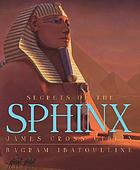
Secrets of the Sphinx

by James Cross Giblin and illustrated by Bagram Ibatoulline
New York:  Scholastic Press, 2004


In this beautiful informational picturebook, the reader learns not only about the history of the Great Sphinx, but also about the history of the ancient Egyptians.  Using two different paint styles (watercolor and gouache), Ibatoulline brings to life the wonders Egypt and the history of its people, from the very primitive Egyptians, to the building of these magnificent structures, to the speculation of present-day scholars.

This book is great for older readers who are interested in the history of Egypt and the construction of the pyramids and Sphinx of Giza, in particular.  In these pages, the reader finds an accurate and comprehensive discussion of various aspects of ancient Egyptian life, including how and where people lived, how they wrote and communicated, what they ate and, most significantly, how they built the pyramids and Sphinx of Giza.  From there, Giblin discusses modern advancements, from the Rosetta Stone to the theories about Atlantis's connection to ancient Egypt.

I enjoyed this book a great deal.  Any reader interested in ancient Egypt, as I was (I used to want to be an archaeologist because I found out people could just find things in the deserts of Egypt.  That was amazing to me.) would devour the information on these pages and want more.  The illustrations are beautiful.  Mostly single-page representations of whatever is being discussed on that page, Ibatoulline preserves the beauty of these monumental structures.  Some pages even have two-page, full bleed illustrations that give the reader an idea of what this area might have looked like back when everything was first being built.  Overall, the text and the illustrations welcome readers and allow them to delve into the information they are reading.  Even though it was written for older readers, I think it could be useable in an primary classroom as well by showing the pictures, reading it aloud, or using isolated pieces of information from the text.


Wednesday, July 24, 2013

Gossamer

By Lois Lowry
Boston:  Houghton Mifflin, 2006


Nobody creates a world quite like Lois Lowry. From the opening scene of Gossamer, Lowry paints a vivid picture of a world not completely unlike ours, in which small, mysterious beings gather memories from the items in our home and then bestow them upon as dreams.  In this story, these dream givers play a crucial role in the lives of a lonely older woman and the troubled young boy she agrees to take in.  Without the help of Littlest One and Thin Elderly, the humans are in danger of suffering at the hands of the "Sinisteeds," those who bring not dreams, but nightmares.

The beginning of this story was simultaneously intriguing and frustrating.  Lowry develops her main characters for several chapters without actually telling the reader who (or what) they are.  Her tactic is very interesting:  she actually has her main character, Littlest One, questioning another character about what she is.  She says, "are we a kind of dog?" (p. 2), "might we be a type of bat?" (p. 5), and later, "might we be human?" (p. 6).  Each time, this question is preceded by some small detail about the beings, such as the fact that they have shadows, but not tails, and not wings.  In this manner, Lowry forces her reader to continually adjust her mental picture of these beings.  What are they?  Why are they there?  What is their purpose?  Although in the end I found this process helpful and even rewarding, in the midst of it I felt like she was going too far.  However, I am reading from a completely different perspective:  I have had practice reading and picturing stories for most of my life, whereas young children might need this coaxing to develop their internal "artist" for reading, picturing, and comprehending fictional texts.

The narrative with the dream givers is woven in between the stories of two humans.  The first is an elderly woman who, based on the "fragments" Littlest One gives her for dreams, has outlived her friends and family, and now lives happily, if somewhat lonely, with her dog, Toby.  The second is a young boy, 8 years old, who has been put into her hands until his mother can get back on her feet.  John is struggling with the heavy burden of understanding that his father was physically and mentally abusive to both him and his mother; throughout the story, Lowry gives more and more details to help the reader see the sad pattern his life had contained before his father "moved to California," as his 8-year-old mind understands it.  To make matters worse, the Sinisteeds are targeting the vulnerable little boy, and Littlest One must do everything she can to protect him so he can resist the terror of his nightmares.

Gossamer deals with some very tough issues.  The physical abuse of little John is explicit in the text, especially towards the end, where he tells the woman that his father punished him for wetting himself when he was three by treating him as though he were a dog.  The language is powerful and moving, and I was saddened by the descriptions of the little boy's feelings of guilt.  However, Lowry does end her note on an uplifting note:  John is starting school, his mother has a good, steady job and a supportive group of friends, and Littlest One begins to train her own dream giver, now that she has matured enough to understand the art.

I love Lois Lowry's style of writing, but I had some trouble with this book.  It is more abstract than some of her other books, and the climactic battle literally takes place in a dream world, which makes it hard to grasp.  That being said, I enjoyed learning the histories of the boy and the woman, and the idea of tiny creatures who choose what you dream about and protect you from nightmares is actually kind of comforting.  I think this would be a great read aloud because Lowry really exercises the reader's ability to form mental pictures, and uses vocabulary that is fairly advanced.  Finally, the story ends on an uplifting note, suggesting the resiliency of children and the importance of imagination and dreams.

For more information on Lois Lowry, including a list of her books and speeches, you can visit her website!

Monday, July 15, 2013

Wonder

By R.J. Palacio
New York:  Random House (2012)


It had been a very long time since I'd picked up a book from the JF section of the library, so I knew it would be very interesting to travel back in time to that middle-school world of scary new experiences and insecurities. The very first page of RJ Palacio's Wonder took me right there.

From that first page, the reader knows that August "Auggie" Pullman is special.  Because of a rare birth defect, 10-year-old Auggie's face is severely deformed, despite dozens of surgeries aimed to help.  He knows he looks different, and describes in painful realism many different encounters he has had throughout his life in which people are horrified and shocked by his looks.  As a result, he is even more nervous about starting middle school--he has never been to school before and does not really want to go now.  The rest of the story follows August's life as he struggles with various middle-school evils:  bullies, the lunch room, hard class work, and the complicated social system in which friend groups seem exclusive and permanent to an outsider like August.  Along the way, he has to learn how to handle being outcast, made fun of, and talked about for his looks.  In the end (I won't give away the whole story!) Auggie understands himself better and, even, comes to accept the way he looks as something that makes him unique, but does not define him.

These revelations also help many other characters in Auggie's school.  At the beginning, almost everyone shuns him, and the social circles mess with him more than most other kids.  However, as we read his story, the perspective shifts from August to other friends and family members, each told in a distinctive voice and style.  I think that this is one of the great strengths of this book.  As the reader switches back and forth, we are getting multiple points of view of the same story and, as a result, we see what August can't yet:  he is impacting so many people in a very positive way just by being himself.  One example of this is when Summer, one of his only friends, is invited to a party with the popular kids, who tell her that if she stopped hanging out with August, she could be "one of them."  Instead of caving under peer pressure, Summer calls home and asks to leave.  This strength of character is the first sign that August will be alright in middle school:  if he has one friend standing by him no matter what, he will be able to get through tough times.

Another strength of this novel is the fact that the experiences August has are typical ones, made atypical only by his unusual looks.  For instance, he gets into a fight with his best friend, Jack, and the two have to apologize and make up.  He has science projects and social studies projects.  He has birthday parties; dresses up for Halloween; attends school plays.  These are events to which so many children can relate, and the insecurities that August wears on his sleeve, many children feel inside.  I think that sometimes, an extraordinary example is used to illustrate feelings that everyone has.  In this case, students entering fifth grade all share anxieties that they won't fit in, won't be popular enough, won't have anyone to sit with at lunch.  But August Pullman sets an example that if you are true to yourself, good people will find you.  More importantly, you might just find the good in people that, at first glance, seemed not to be there.

This story is about a boy's journey through fifth grade, but it is also a story of overcoming fears, growing up, and accepting yourself and those around you whom you don't understand.  One of my favorite sections of the novel is on page 252, in August's chapter "Known For:"  "As much as I love Star Wars, I don't want that to be what I'm known for.  Everyone's known for something in middle school....I'm not sure what I want to be known for, but it's not that.  That's not exactly true:  I do know what I'm really known for.  But there's nothing I can do about that.  A Star Wars duffel bag I could do something about."  This quote shows tremendous growth on August's part, who, at the beginning of the story covered up his face by any means possible and hated being recognized.  This shows that he is beginning to embrace his differences from other people, but that he is comfortable enough to know now that he can be known for other things as well.  When people finally took the time to get to know August and treat him like just another person, he began to think of himself the same way.  In the end, he is celebrated for his differences, just as we should celebrate our students' differences and use them as teaching and learning activities.

The messages in this book are great for students in this awkward transition period.  I found it unique that instead of only leaving the reader to figure out the themes, Palacio also used one of the teachers as a "voice of reason." The precepts this teacher shared with his students are then listed together at the end of the book.  This was very clever, because it means that readers who may not have gotten each of these themes from the story itself can still think about their implications.  Auggie's precept, of course, is a great ending point for the story, and I think for this blog post as well:

"Everyone in the world should get a standing ovation at least once in their life because we all overcometh the world" (p. 313).

If students believed in themselves the way August learns to, middle school might be an easier place.  Until that happens, August Pullman sets a great example.